
Books for people who haven’t surrendered their judgment

A Razor, a Roast, and a Reckoning
Three mirrors. One madness. Zero excuses left.
Satirical diagnosis (Insanity), Comedic demolition (Grass), and Melancholy mirror (1825)
Written to be returned to. Not skimmed. Not forgotten.
Satire that diagnoses — leaving the ground visible
ENGLISH | ESPAÑOL | FRANÇAIS | DEUTSCH | हिंदी
-
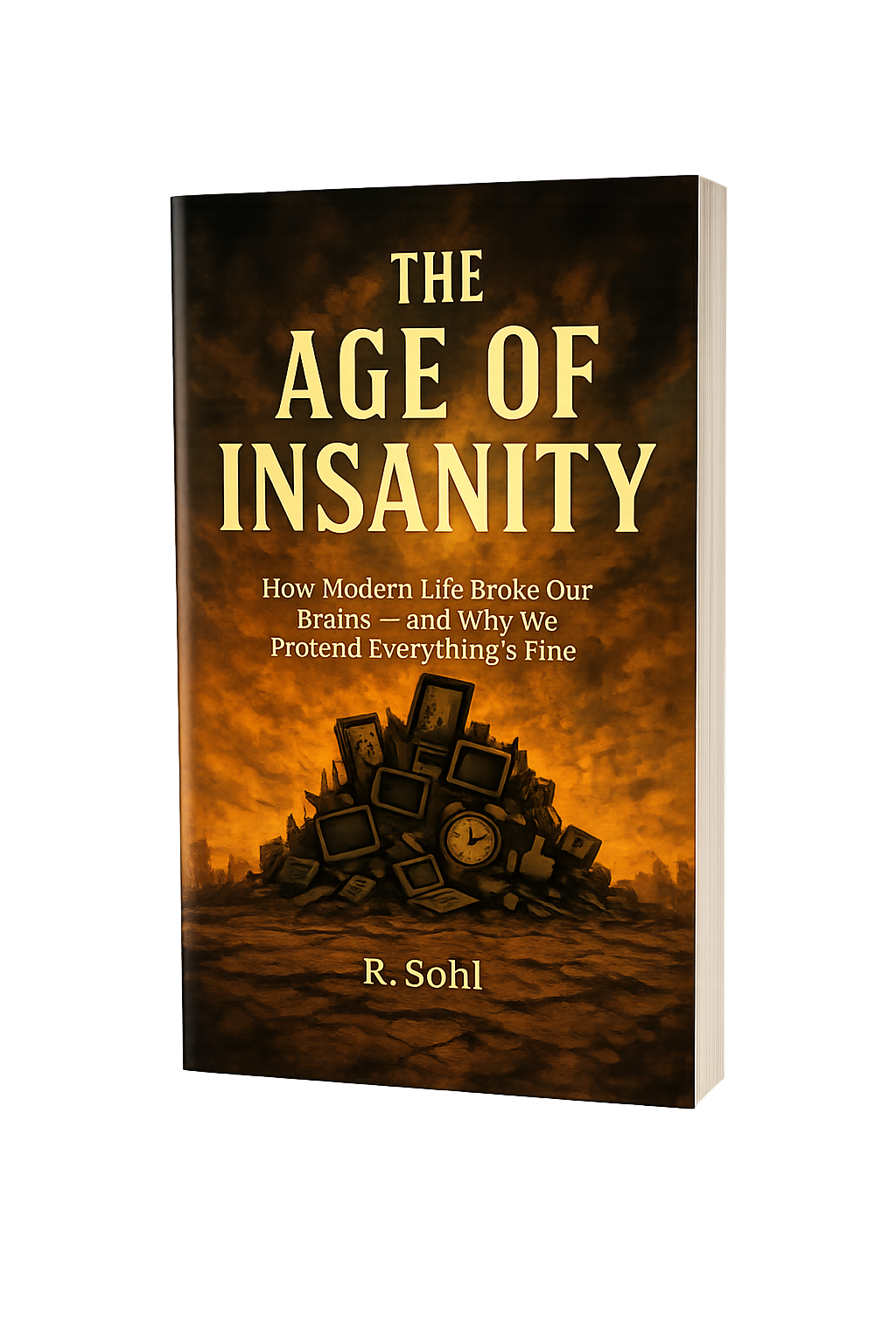
The Age of Insanity
The world didn’t suddenly go crazy — it normalized the madness.
We live in a civilization that can stream miracles, summon groceries, cancel strangers, edit biology, outsource outrage, and still panic when the Wi-Fi flickers. We have endless information without wisdom, connection without intimacy, progress without purpose — and feelings dressed up as truth.
The Age of Insanity is a sharp cultural satire and modern society critique — a scalpel aimed directly at the psychology of contemporary life. Through biting humor and social commentary, the book examines the habits and assumptions shaping modern culture, exposing how distraction replaces meaning and performance replaces character.
At its core, the book dissects seven pillars of modern madness:
feelings replacing truth || dopamine replacing joy || vanity replacing character || identity replacing responsibility || noise replacing wonder || consumption replacing faith || comfort replacing family.
This is a philosophy-driven critique of media culture, identity trends, outrage cycles, and the modern search for meaning — written for anyone who looks at today’s headlines and wonders if sanity quietly left the building.
It isn’t nostalgia.
It isn’t partisan politics.
It’s a mirror — the kind that reflects modern life with uncomfortable clarity.The Age of Insanity doesn’t promise to fix the world.
It reminds you that clarity starts closer to home.And if you laugh while it stings…
that’s the insight landing.
Comedy that demolishes — clearing the site
ENGLISH | ESPAÑOL | FRANÇAIS | DEUTSCH | हिंदी
-
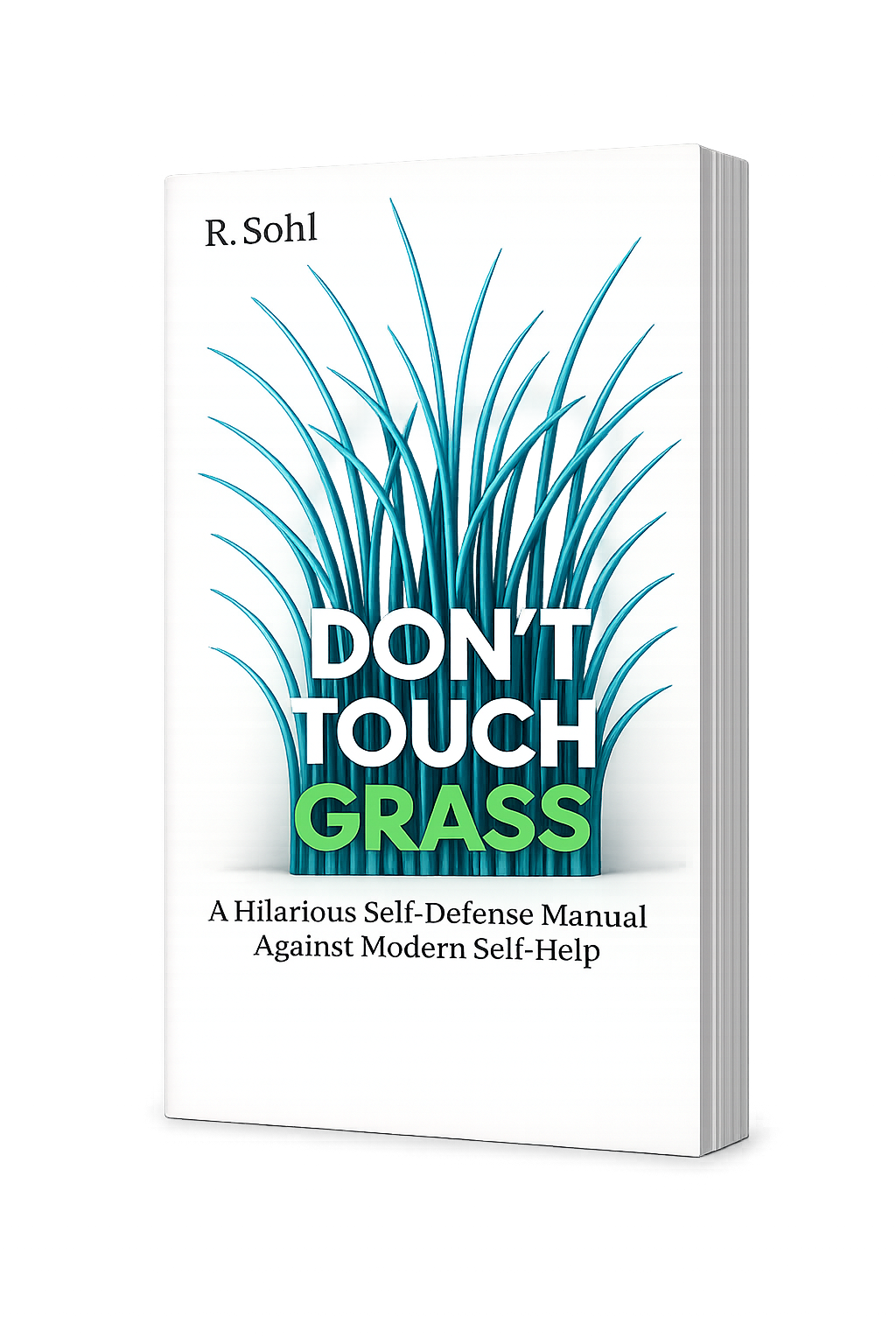
Don’t Touch Grass
This isn’t a self-help book.
It’s self-defense against modern self-help culture.A sharp, hilarious satire of fake healing and wellness trends, Don’t Touch Grass roasts the gurus, therapies, and spiritual shortcuts that promise transformation while quietly replacing responsibility with ritual.
We live in a world where every inconvenience becomes “trauma,” every feeling demands a diagnosis, and adulthood is treated like optional roleplay. This book dismantles the modern self-improvement circus — from breathwork prophets and quantum manifesters to influencer therapy culture — exposing how coping became a lifestyle brand and growth became performance.
But beneath the humor is a practical core: the boring, unfashionable habits that actually build a life. Showing up. Taking responsibility. Doing the work no guru can sell you.
This is social commentary with teeth — a comedic critique of modern wellness culture and the avoidance patterns hiding inside it.
If you feel attacked, you might be the target.
If you laugh, you’re in on the joke.
If you change your habits, the book did its job.Don’t Touch Grass won’t promise enlightenment.
It will wake you up — and make you laugh while it does.
Wisdom that remembers what the present forgot.
ENGLISH | ESPAÑOL | FRANÇAIS | DEUTSCH | हिंदी
-
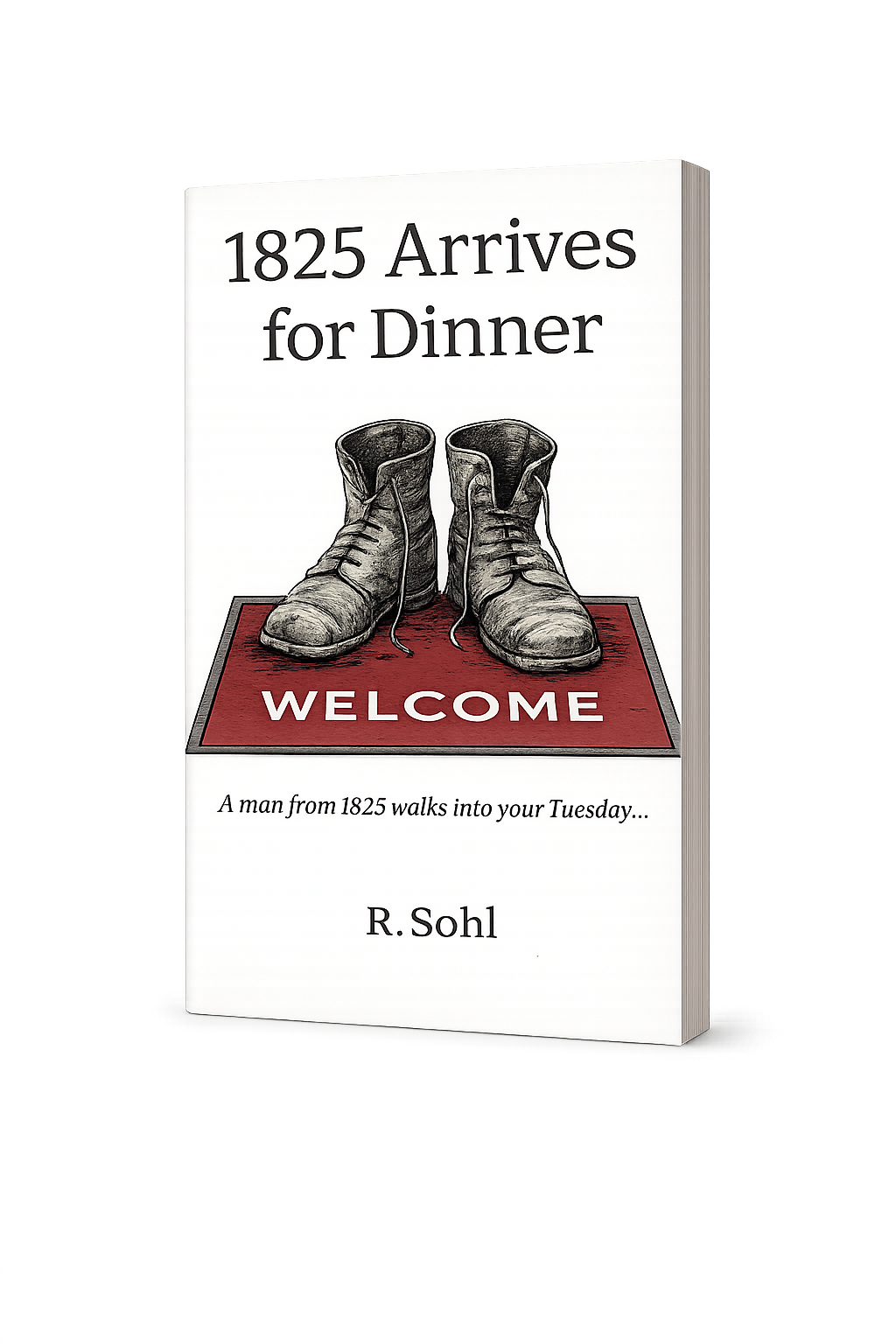
1825 Arrives for Dinner
A man from 1825 walks into your Tuesday.
His questions are simple. His punchlines aren’t.Nathaniel Hart dies in a cornfield in 1825 — and wakes up on a vinyl porch in modern suburbia.
In the span of one ordinary day, he encounters central heating, year-round supermarkets, bottled pain relief, horseless carriages, glowing screens, and a culture built on convenience. Through the stubborn common sense of another century — and a dry, uninvited wit — he examines a world that can do almost everything except explain itself.
1825 Arrives for Dinner is a sharp time-travel satire and modern society critique that uses historical perspective to question the comforts of contemporary life. It explores technology, consumer culture, and the attention economy with humor and insight, asking what happens when labor disappears, discomfort is medicated, and resilience becomes optional.
This isn’t nostalgia for the past or fear of progress. It’s a humorous social commentary on how convenience reshapes meaning — and what we may trade away when life becomes frictionless.
If modern living has never been easier…
why does it no longer feel simple?

A Return, a Repair, and a Real Beginning
Two paths inward. One life rebuilt.
Reflection, recovery, and the quiet work of living again.
Sanity that rebuilds — restoring solid ground
ENGLISH | ESPAÑOL | FRANÇAIS | DEUTSCH | हिंदी
-
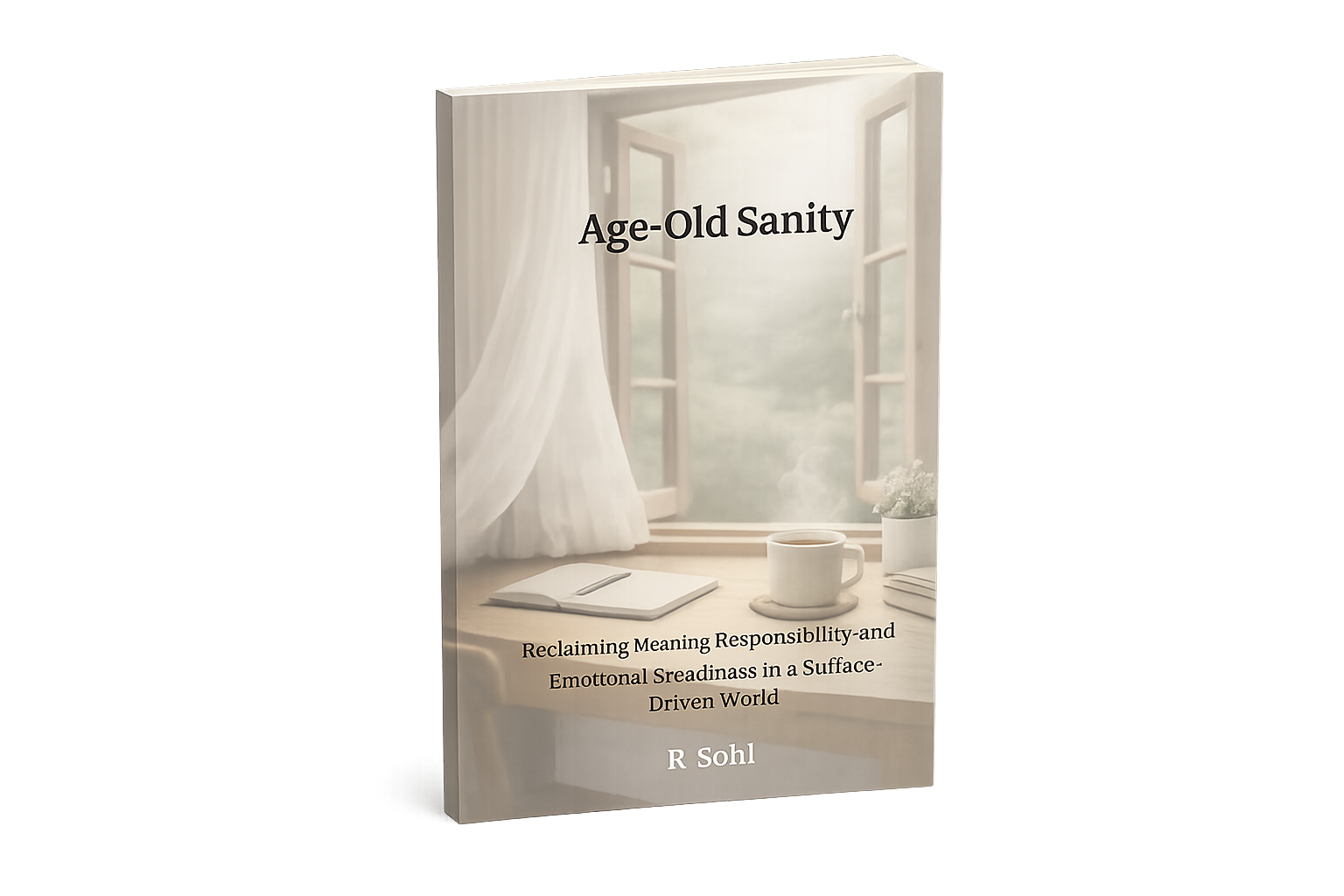
Age-Old Sanity
Before the noise — before endless productivity hacks, self-optimization, and the pressure to upgrade every corner of life — there was a quieter rhythm to living. A rhythm grounded in presence, responsibility, and the understanding that real meaning grows slowly.
Age-Old Sanity is not nostalgia. It’s a return to balance — a practical exploration of mindful living, personal growth, and the steady habits that support a grounded life.
After the satire and cultural diagnosis of the earlier books, this volume turns inward. It examines what modern life often pushes aside: the values that endure beyond trends, the practices that build resilience, and the human rhythms that make everyday life feel intentional instead of frantic.
There are no dramatic reinventions here. No overnight awakenings. Instead, this book offers modern self-help rooted in ordinary wisdom — showing up consistently, telling the truth, caring for what’s in front of you, and measuring progress by steadiness rather than spectacle.
This is the bridge between clarity and action — between understanding the chaos of modern life and building habits that support real well-being.
Not a rejection of the present.
A reminder that balance, resilience, and intentional living were never complicated.They were practiced.
Quietly. Repeatedly. Humanly.
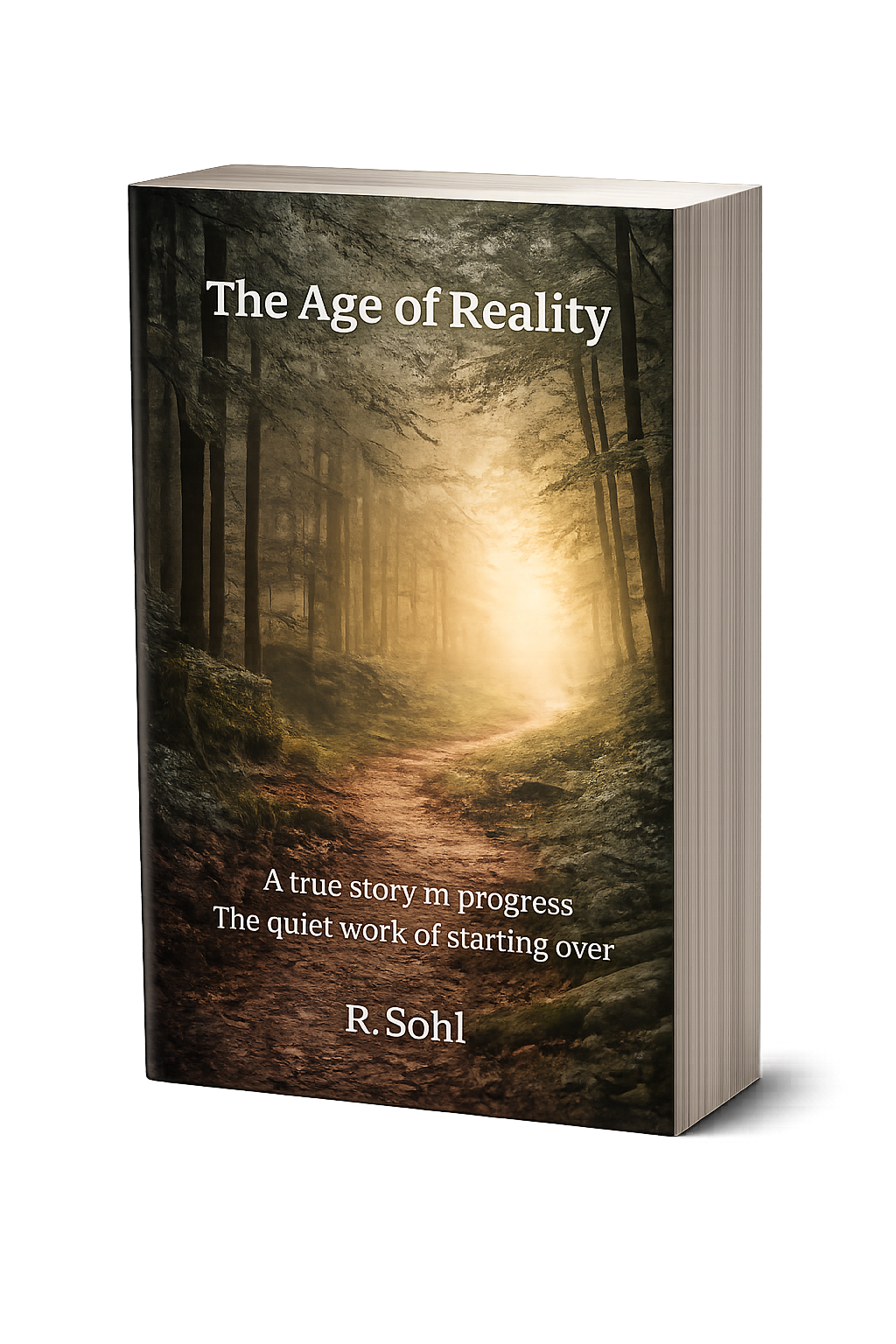
Reality that insists — learning to stand again
ENGLISH | ESPAÑOL | FRANÇAIS | DEUTSCH | हिंदी
-
Barthélemy — B — doesn’t lose everything at once.
His father leaves. His mother disappears into addiction. His brother slips into mental illness. The grandmother who holds the family together dies. By eighteen, B is standing in the aftermath — alone, exhausted, and unsure how to live inside a world that keeps taking more than it gives.
When a walk into the woods turns into being truly lost, something shifts. For the first time, escape isn’t an option. B is forced to sit with grief, anger, fear, and the quiet question he’s been avoiding: What now?
What follows is a deeply human story of rebuilding after loss — not through miracles or dramatic reinvention, but through small acts of resilience. Learning his grandfather’s clarinet one imperfect note at a time. Working night shifts at a modest hotel. Building routines. Facing emotional wounds without running. Choosing presence over numbness, again and again.
The Age of Reality is a powerful mental health and personal growth journey about grief recovery, survival, and finding meaning after trauma. It’s a story for anyone who has ever had to stand back up when life refused to make sense — and discovered that healing is built quietly, through repetition, honesty, and stubborn hope.
This isn’t about becoming extraordinary.
It’s about learning how to live — fully, imperfectly — in reality.
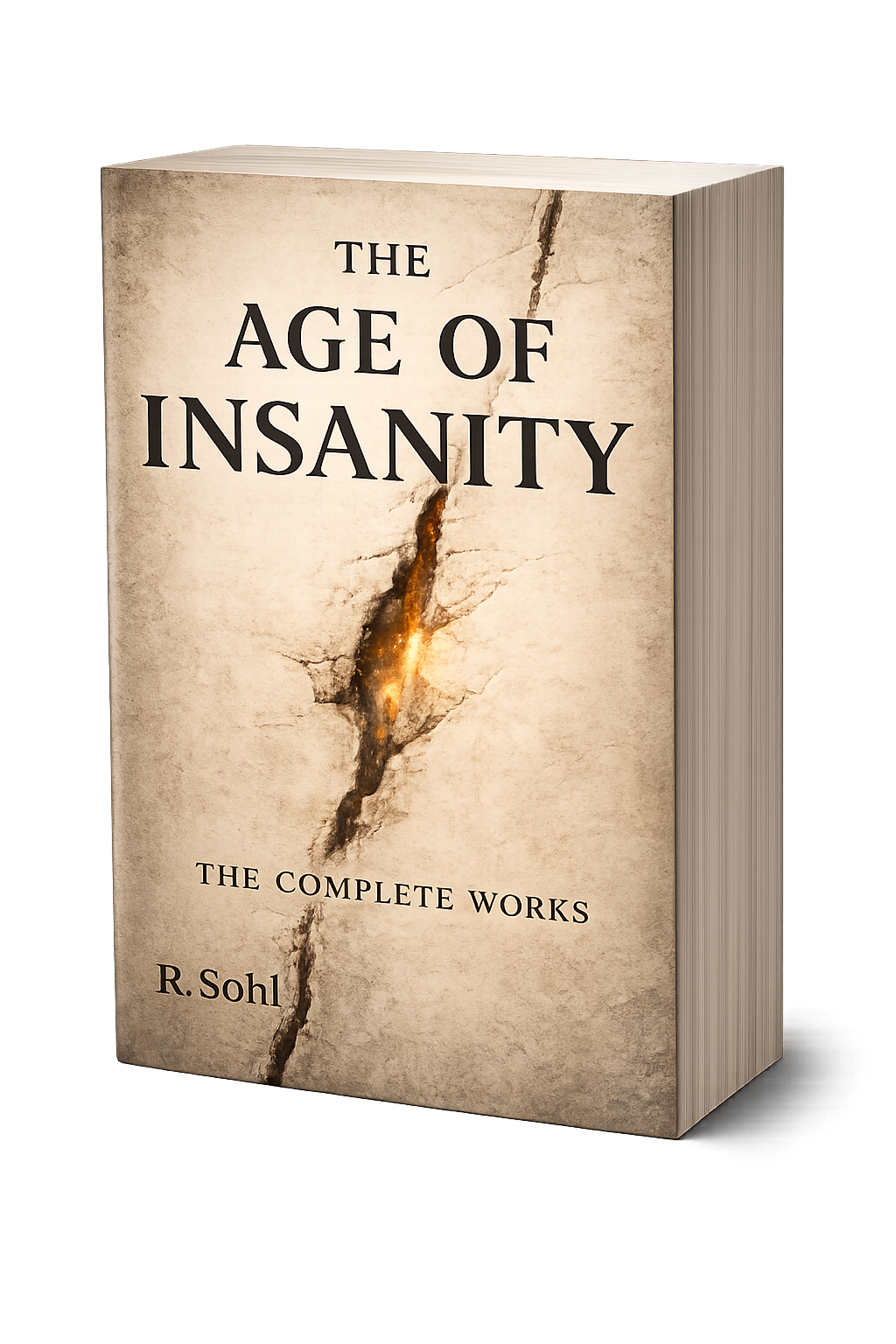
The full reckoning — diagnosis, demolition, and return
ENGLISH | ESPAÑOL | FRANÇAIS | DEUTSCH | हिंदी
-
THE AGE OF INSANITY — The Complete Works
All five books. One volume.This is the complete series — gathered intact and bound into a single arc exploring modern life, cultural satire, personal growth, and the search for clarity.
Each book appears in full, exactly as written. No abridging. No commentary. No softened edges. Just the journey as it unfolds — from confrontation to self-reflection, from philosophical humor to resilience and rebuilding.
• The Age of Insanity → Names the madness of modern life
• Don’t Touch Grass → Satirizes the culture of escape
• 1825 Arrives for Dinner → Reveals contrast and perspective
• Age-Old Sanity → Reclaims forgotten balance and wisdom
• The Age of Reality → Lives the principles of rebuilding after lossRead individually, each book stands as its own exploration of self-awareness and modern struggle.
Read together, they form a continuous movement — diagnosis, demolition, remembrance, rebuilding, and reality.This volume isn’t a highlight reel.
Not a sampler.
Not a retrospective.It’s the complete literary journey — satire, reflection, emotional honesty, and the quiet work of personal change that follows.
If one book made you pause, this is the full progression it belongs to — a complete personal growth and cultural critique series about facing reality, rebuilding meaning, and choosing clarity in a chaotic world.
Because clarity isn’t a moment.
It’s a progression.
Beyond The Age of Insanity
Stories that teach through story
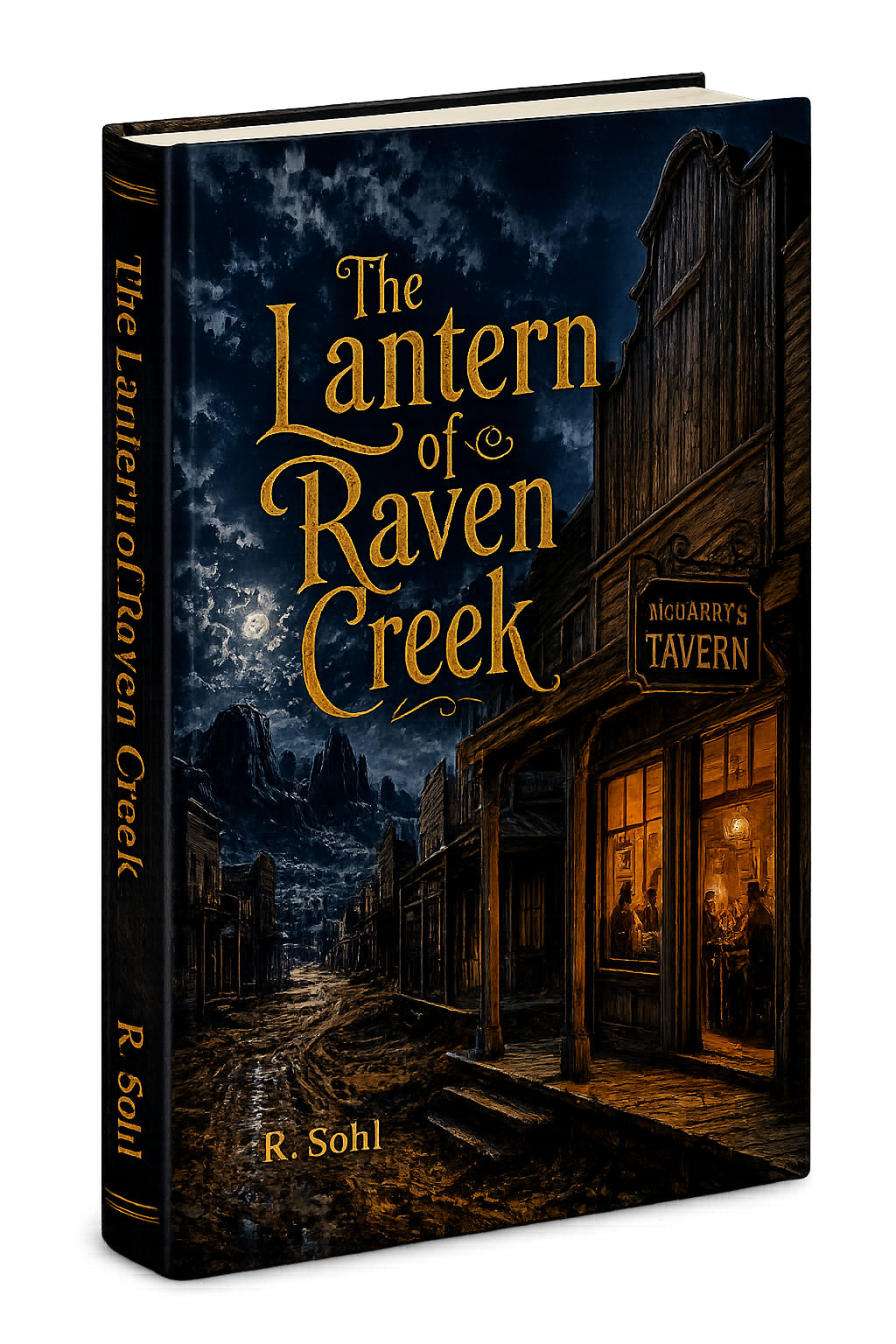
A detective who teaches you how to think, not just what to think
-
The Lantern of Raven Creek
Most detective stories ask the reader to admire what only the detective—or the author—could possibly have known.
The Lantern of Raven Creek takes a different path.
Elias Vale possesses no supernatural gifts, hidden technology, or impossible intuition. Every mystery is solved using observation, logic, and a way of thinking that is fully visible to the reader. The clues are never concealed behind information the reader cannot access. Instead, the challenge lies in recognizing the false assumption everyone else has accepted without question.
Set in the rugged American frontier of the 1850s, this literary Western mystery follows Elias through a series of increasingly intricate investigations involving false accusations, impostors, locked rooms, forged letters, bloody evidence, and carefully constructed deceptions. As his reputation grows, so too does the danger posed by those determined to destroy it.
More than a detective novel, The Lantern of Raven Creek invites readers to think differently. Each case demonstrates a practical method of observation and reasoning that reaches beyond fiction—a way of approaching problems by questioning assumptions rather than collecting clever clues.
Rich with frontier atmosphere, memorable characters, and mysteries that reward careful thought, this is a novel for readers who appreciate intelligent detective fiction, literary storytelling, and puzzles that can truly be solved.

Not every map leads to a place. Some lead to a way of seeing
-
The Map’s Secret
Not every fantasy journey is about defeating an enemy or finding hidden treasure.
The Map's Secret is an old-world coming-of-age adventure that asks a deeper question: How does a young man learn to see the world as it truly is?
When sixteen-year-old Gaugh is entrusted with an ancient map, he quickly discovers that it refuses to agree with the world around him. Cities appear where there are oceans. Ordinary roads conceal extraordinary places. The greatest dangers arrive not as monsters, but as persuasive people, comfortable shortcuts, and choices that seem wiser than the path set before him.
Unlike many fantasy novels, the journey itself is the mystery. Every encounter, conversation, and decision becomes part of a larger education, inviting the reader to discover that the greatest secrets are not hidden in distant lands, but in learning how to recognize truth, temptation, wisdom, and purpose.
Filled with memorable characters, breathtaking landscapes, quiet philosophy, and timeless adventure, The Map's Secret is a richly imagined tale for readers who enjoy classic fantasy, literary storytelling, and journeys that continue long after the final page.
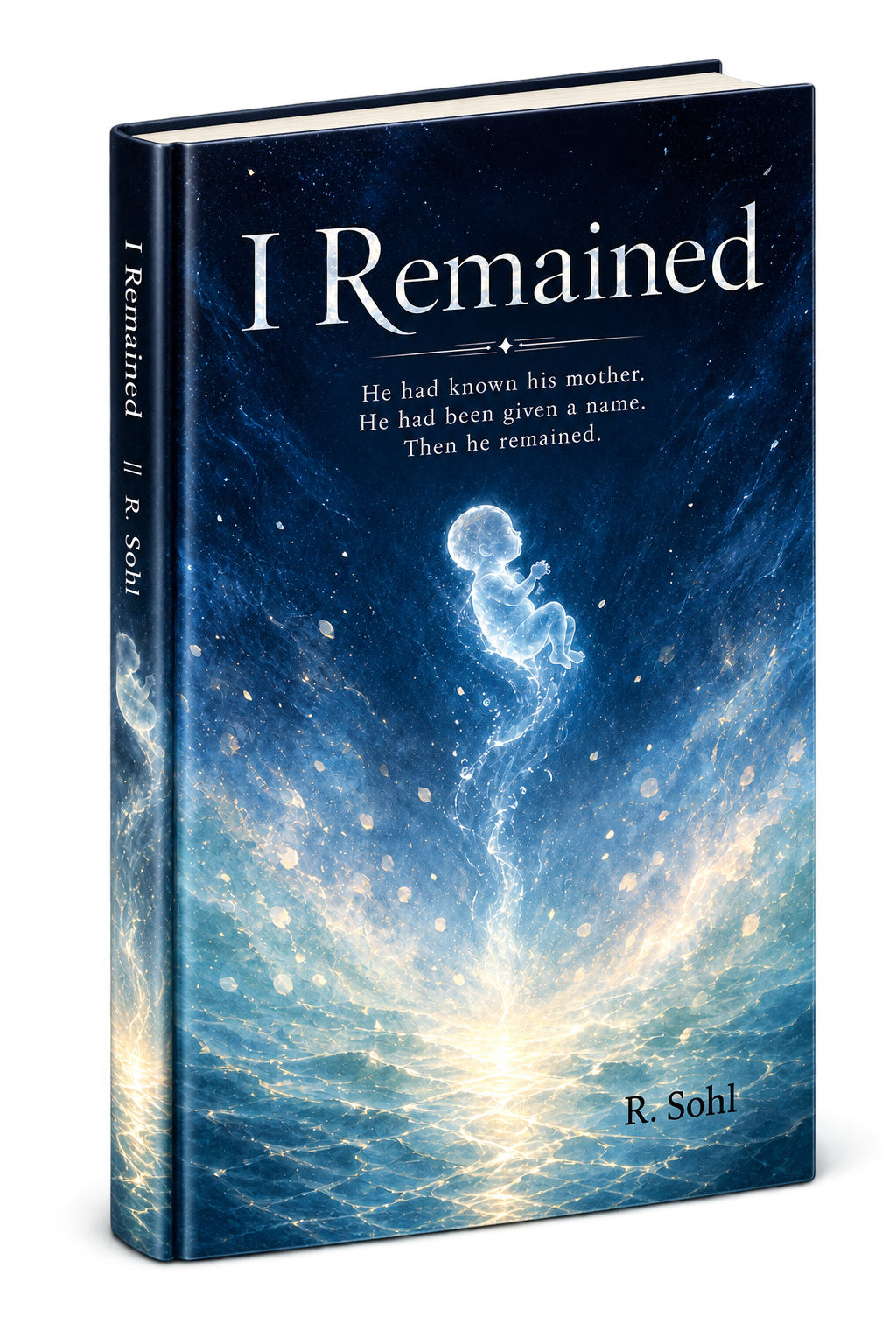
He never reached the world. He never stopped searching for the life that was his
-
I Remained — A Haunting Literary Novella About an Unborn Child, Motherhood, Grief, and the Search for a Life
Before he had language, he knew his mother’s heartbeat. Before he understood what a name was, she gave him one. Then the body preparing to carry him into the world came to an end.
He did not end with it.
I Remained is a haunting literary novella about an unborn child whose consciousness continues after his body is gone. Left without breath, flesh, or a place among the living, he remains near the mother who once contained his entire world. He remembers her voice, her songs, and the hand he had been preparing to touch.
But she cannot hear him.
As time carries his mother forward, the child begins searching for the life he believed was waiting for him. He reaches toward other bodies, other mothers, and other beginnings, only to discover that a life cannot simply be borrowed—and that love belongs to the person it has learned to recognize.
Written with lyrical restraint and emotional precision, I Remained explores abortion, motherhood, grief, identity, consciousness, memory, and the meaning of belonging. It is neither a political argument nor a conventional ghost story. It is an intimate work of literary fiction told through the quiet, unbearable experience of a child who knew he existed, had been given a name, and never stopped loving the first home he knew.
For readers of philosophical fiction, spiritual literary fiction, psychological novellas, and deeply emotional stories about motherhood and loss, I Remained is a brief but unforgettable meditation on what persists after everything else has been taken.